Authenticity Won't Save You: How Cultural Creators Can Stop Feeding the Algorithm and Start Building Real Reach
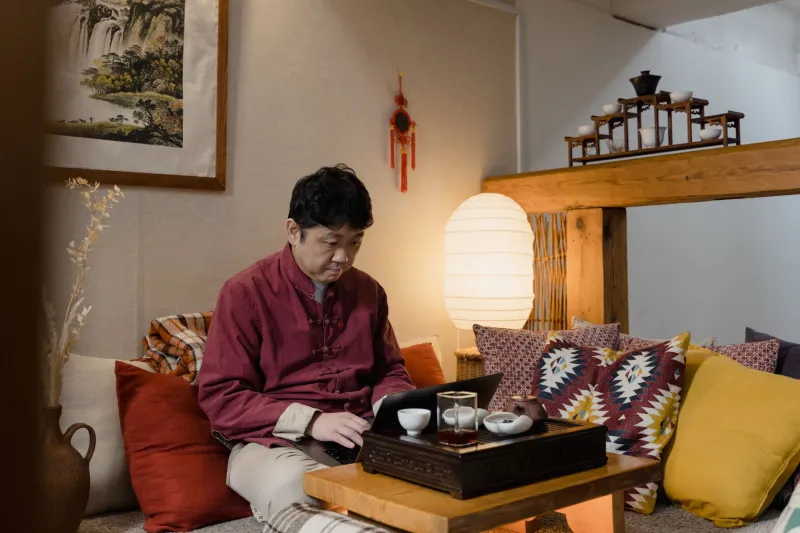
Let's get something out of the way: being real about your culture is not a growth strategy. It's a value. Those are two very different things, and confusing them is one of the most expensive mistakes a cultural creator can make.
You've probably heard the advice a hundred times — just be authentic, the right people will find you. And maybe that's true in some idealized version of the internet. But in the actual, monetized, engagement-optimized platforms we're all living on? Authenticity is table stakes. It's not a differentiator. The algorithm doesn't reward sincerity. It rewards velocity, pattern-matching, and the kind of content that keeps eyeballs locked to a screen for 0.3 seconds longer than the last thing.
For creators whose work is rooted in specific cultural traditions, languages, aesthetics, or histories — that's a structurally unfair fight. And it's worth naming that clearly before we talk about what to do about it.
Why the Algorithm Works Against Niche Cultural Content
Social platforms are optimized for broad, fast engagement. The recommendation systems behind TikTok, Instagram Reels, and YouTube Shorts are built on pattern recognition — and the patterns they've learned are shaped by the majority of existing content, which skews heavily toward Western, English-language, and mainstream pop culture references.
When your content sits outside those patterns — whether it's rooted in Chinese folk art, Vietnamese storytelling traditions, or a hyper-specific regional subculture — the algorithm has fewer signals to work with. It doesn't know who to show your content to, so it shows it to fewer people. Lower initial distribution means fewer interactions. Fewer interactions confirm (to the algorithm) that the content isn't worth pushing further. It's a self-reinforcing loop that has nothing to do with the quality or value of what you made.
This isn't a conspiracy. It's just math. But the effect is real: cultural creators consistently report lower organic reach compared to peers making more generalized content, even when production quality and posting frequency are identical.
The platform will not fix this for you. So what do you actually do?
Stop Optimizing for the Wrong Game
The first shift is mental. If you're spending significant creative energy trying to make your cultural content more algorithm-friendly — softening references, translating nuances into digestible hooks, chasing trending audio — you're not building a cultural brand. You're diluting one.
There's a real cost to that dilution, and it's not just artistic. Watered-down cultural content tends to attract a watered-down audience — people who are mildly curious but not deeply invested, who won't buy your course, commission your art, or recommend you to their community. The algorithm might give you a bump, but the business doesn't follow.
The more sustainable move is to get honest about what you're actually building and who it's genuinely for. That clarity is what allows you to route around the algorithm entirely.
The Platforms That Actually Work Differently
Not all platforms are equally hostile to niche cultural content. Here's where the landscape actually gets interesting.
Email lists remain one of the most underused tools for cultural creators. An email subscriber chose you. They opted in, gave you their address, and said yes, I want more of this. That's a fundamentally different relationship than someone who stumbled across your Reel between ads. Platforms like Substack, ConvertKit, and even a simple Mailchimp list let you build a direct channel that no algorithm can throttle.
Community platforms — Discord, Geneva, Mighty Networks — are growing specifically because they allow niche audiences to self-select and gather. A tight community of 300 people who are deeply invested in your specific cultural perspective is worth more, commercially and creatively, than 30,000 passive followers who found you through a trending sound.
YouTube's search function still operates differently from its Shorts algorithm. Long-form content built around specific search terms — think tutorials, cultural explainers, documentary-style storytelling — can surface years after you post it. That's evergreen reach that doesn't require you to post three times a day to stay visible.
Pinterest is chronically underrated for visual cultural creators. It's search-based, not feed-based, and content has a much longer shelf life. If your work has a strong visual component — illustration, design, textile arts, food — Pinterest can drive consistent traffic without requiring you to perform for an engagement metric.
Build the Infrastructure the Algorithm Can't Touch
Beyond specific platforms, there's a broader strategic principle worth adopting: own as much of your audience relationship as possible.
That means a website. It means a mailing list. It means products, services, or content that live somewhere you control — not somewhere that can change its terms of service, tweak its algorithm, or simply disappear (RIP Vine, RIP Google+).
For cultural creators specifically, this infrastructure matters even more because your audience is often highly motivated. People who connect with niche cultural content tend to connect hard. They're looking for something they haven't found elsewhere. If you give them a way to stay close to your work — a newsletter, a membership, a community space — they'll use it. But you have to build it and invite them in.
Rethink What "Reach" Actually Means
Here's a reframe worth sitting with: reach is not the same as relevance.
A post that reaches 50,000 people who feel vaguely entertained is not more valuable than one that reaches 500 people who feel genuinely seen. The second group is who builds a career. They're the ones who share your work with their cousin, who show up to your workshop, who tell their friends you have to follow this person.
Cultural creators have a unique advantage here, and it's one the algorithm actively obscures: the emotional specificity of your work creates disproportionate loyalty. Someone who finds a creator who gets their experience — their family dynamic, their aesthetic vocabulary, their sense of humor shaped by two different cultures — doesn't just follow. They evangelize.
That word-of-mouth dynamic is genuinely hard for the algorithm to replicate or replace. It's slower. It's less dramatic than a viral moment. But it compounds in ways that viral moments almost never do.
Play the Long Game on Your Own Terms
None of this means you should abandon social media. It means you should use it differently — as a top-of-funnel introduction to your work, not as the primary place where your audience relationship lives.
Post what represents you. Let people find you. And then give them somewhere better to go.
Build the email list. Start the Discord. Launch the Substack. Make the thing that lives on your own domain. The algorithm will keep changing — it always does — but the audience you've built in spaces you own? That's yours.
Your heritage deserves more than a slot in someone else's content feed. Build the infrastructure that reflects that.