Going Deep Instead of Wide: How Hyper-Specific Cultural Content Is Quietly Taking Over
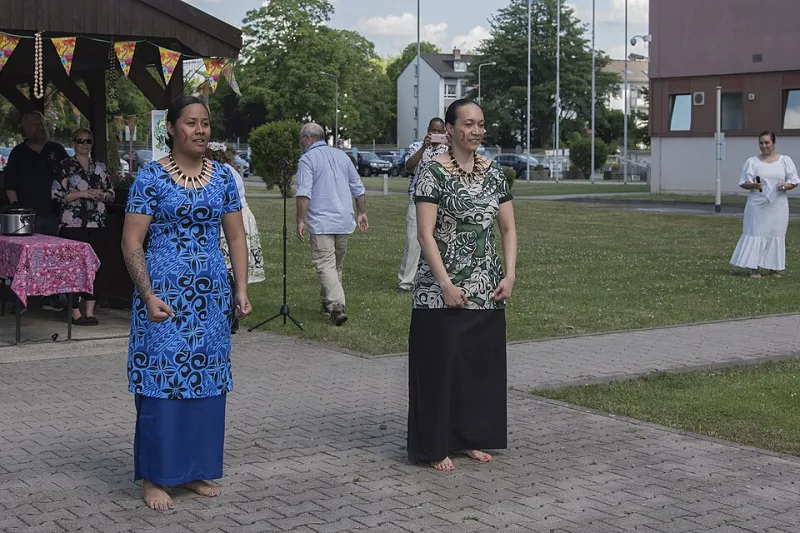
Photo: U.S. Army Corps of Engineers Europe District from Wiesbaden, Germany, Public domain, via Wikimedia Commons
There's a story a lot of creators tell themselves early on: to grow, you need to appeal to everyone. Keep it relatable. Sand down the edges. Don't get too specific about where you're from, what you grew up eating, or the particular way your grandmother said your name.
That advice made some sense when the internet was younger and the goal was to cast the widest possible net. But something has shifted. The creators who are genuinely building sustainable audiences right now — the ones with real community, real income, and real cultural influence — are doing almost the exact opposite. They're going deeper, not broader.
The Algorithm Rewards Specificity More Than You Think
Here's what's actually happening under the hood. Platforms like TikTok, YouTube, and Instagram no longer just push content to your existing followers — they actively test your content with strangers, looking for signals of genuine engagement. And genuine engagement, it turns out, comes from people who feel seen.
When a creator makes a video about the very specific anxiety of being the only Mandarin speaker in a room full of people who assume you're fluent in Cantonese, that video doesn't just reach Chinese-American viewers. It reaches anyone who has ever been misread by their own community. It reaches second-generation immigrants of every background. It reaches people who are curious about experiences different from their own. The specificity is the hook — it's what makes the content feel real instead of manufactured.
Generic content, by contrast, blends into the noise. There are already a thousand videos about "immigrant family struggles" told in the broadest possible strokes. There is exactly one creator talking about the specific tension of a Shanghainese family navigating a Cantonese-dominant diaspora community in San Francisco. That specificity is a story only that person can tell — and that's exactly why people watch.
Case Studies Worth Paying Attention To
Look at what's happened in the food content space. Creators who built audiences around regional Chinese cuisines — not just "Chinese food" but Sichuan street snacks, Hakka home cooking, or the very particular flavor profile of a Taiwanese breakfast shop — have outperformed generalist food channels for years now. Their comment sections aren't just full of people who share that background. They're full of curious outsiders who found a new obsession.
Or consider the wave of creators documenting traditional crafts and artistic practices — Chinese paper-cutting, ink wash painting, embroidery techniques from specific provinces — on platforms where you'd least expect it. Some of these accounts have grown to hundreds of thousands of followers not despite their specificity, but because of it. The content feels rare. It feels like access to something most people would never otherwise encounter.
The income streams follow the same logic. Creators in these niches have found that their audiences are highly motivated buyers. Whether it's a digital course on a specific art technique, a Patreon where they go deeper into cultural context, or a product line tied to their aesthetic, the conversion rates tend to be strong because the audience isn't casual. They showed up specifically for this perspective.
What "Going Deep" Actually Looks Like in Practice
Going deep doesn't mean making content only your immediate community can appreciate. That's a common misread of the strategy. It means telling your specific story with enough context and warmth that an outsider can follow along and feel welcome.
The best cultural creators are essentially translators. They're fluent in their own experience and in how to make that experience legible to someone who didn't grow up with it. They don't dumb it down — they add the right amount of scaffolding. A video about the ritual of a Chinese New Year's Eve dinner can be made for a broad American audience without stripping out a single specific detail. The details are the point.
Practically, this means:
- Naming things specifically. Don't say "traditional dish" when you can say the actual name of the dish, with context.
- Trusting your audience's curiosity. Most people watching are not bored by unfamiliar references — they're delighted by them.
- Leaning into the moments of tension or complexity. The most engaging cultural content doesn't pretend everything is smooth. It sits with the contradictions.
The Long-Term Play
There's also something worth saying about sustainability. Creators who built their brand around trending sounds or broad lifestyle content often find themselves in a hamster wheel — constantly chasing the next thing to stay relevant. Creators who built around a specific cultural perspective have something more durable: a point of view that doesn't expire.
Your heritage, your specific cultural vantage point, your particular slice of the diaspora experience — none of that goes stale. If anything, it compounds. The longer you create from that place, the more you become the definitive voice for it. You're not competing with every other creator on the internet. You're building something only you can build.
That's not a niche. That's a foundation.
And the audience — the right audience — will find it.