Give Me Three Months: Why Slow Commissions Are Beating Fast Content
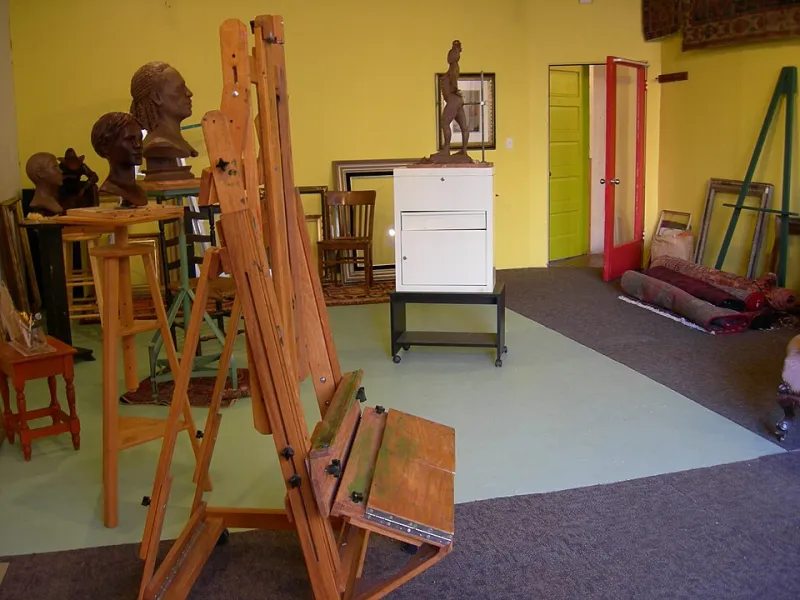
Photo: Joe Mabel, CC BY-SA 3.0, via Wikimedia Commons
The ask sounds like this: not "can you turn something around by Friday," but "we're planning for spring—what could you do with ninety days and a real budget?"
It's happening more often in 2026. Collectors commissioning original pieces for their homes, small brands budgeting for a single considered collaboration instead of twelve social posts, and galleries slotting in process-driven shows rather than fast, thematic group hangs. Slow work is back—partly as a reaction to the churn of the last half-decade, partly because the buyers who can afford to pay well have figured out that speed is not the same thing as value.
For cultural creators in particular, this is the opening of the decade. Here's what it actually takes to win it.
Why depth became the scarce good
Everything about the last few years pushed creators toward more output and less consideration. Post more. Ship faster. Reply within the hour. The result is a market crowded with competent, interchangeable work—and a shrinking group of buyers who can tell the difference between something made in a weekend and something made across a season.
Those buyers have money and no time. They don't want to art-direct you frame by frame. They want a point of view, a process they can trust, and a piece that couldn't have been generated by feeding three prompts into a model.
A cultural practice is naturally slow. It involves research, conversation, translation, materials, and the kind of specificity you can't rush. That used to be a liability. Now, framed correctly, it's the product.
What a slow commission is (and isn't)
It's not a big project with vague deadlines. A slow commission has a defined start and end, a fixed fee or clearly broken-out milestones, a set number of check-ins, and a deliverable you can describe in a sentence.
It also isn't a retainer. A retainer is ongoing availability; a slow commission is one deep thing, finished. Keep those categories apart in your head, and in your contract, or you'll end up on call for six months and produce nothing.
Typical shapes that work well on a ninety-day timeline: a suite of three to five original pieces, one large-scale work with a written process document, a limited-edition object with documented provenance and materials, or a cultural research project that ends in a public-facing piece plus a talk.
Scoping it so nobody gets burned
Write the timeline in blocks, not vibes.
- Weeks 1–2: intake and research. Interviews, archive review, materials sourcing. One check-in.
- Weeks 3–6: direction. Two or three avenues explored in sketch, sample, or maquette form. One presentation, one round of feedback.
- Weeks 7–10: making. Minimal client contact—this is where the work happens and where scope creep does the most damage.
- Weeks 11–12: finishing, documentation, delivery, and a handoff conversation.
Put the number of revisions in writing. Two rounds is normal, three is generous, unlimited is a business you don't want. And be specific about what a revision is: a color adjustment is not the same request as a re-conception, and the proposal should say so in plain English.
Pricing: say the number out loud
A three-month commission should not be priced like a three-day one with a delay built in. You are being paid for a quarter of your studio's capacity, plus a level of attention that isn't available in a rush job.
A workable pattern for US clients:
Deposit at signing: 40 to 50 percent, non-refundable, covering research and direction. This is the single most important number in the agreement. It funds the phase where you do your best thinking and it filters out clients who were only curious.
Milestone payment at direction approval: 25 to 30 percent, triggering the making phase.
Balance on delivery: the remainder, released before final files or the physical work changes hands.
If a client can't pay a deposit, they're not a slow-commission client. That's not a judgment about them; it's a boundary that protects the project.
Pitching the timeline as the feature
Most creators apologize for a long timeline. Flip it. The three months is the reason the work will be good, and the pitch should say that plainly.
Something like: "For this piece I work in a ninety-day structure—research, direction, making, finishing. That's what lets the work hold up to the specificity of the story. Here's the schedule and the fee."
Then show evidence. Two or three past projects with process photos, a short note on what the research turned up, a before-and-after of the making. Buyers who pay for depth want to see the depth, not just the result. A process page on your site does more selling than a portfolio grid.
The honest risks
Slow commissions are not automatically safer than fast ones. Long timelines invite scope creep, because three months of contact gives a client three months of opportunities to add ideas. Long timelines also strain cash flow if the deposit is small—hence the number above. And a single slow commission can leave you with a light calendar if it's the only thing you book, so most studios run one or two deep projects alongside shorter paid work.
One more: some clients say "slow" but mean "unlimited." The contract is what distinguishes the two. Write it before you get excited.
Depth as the advantage
The creators winning these projects aren't the ones with the biggest followings. They're the ones who can explain what they do, why it takes the time it takes, and what a client gets for the wait. In a market flooded with fast output, the ability to promise a season's worth of attention—and deliver it—has quietly become one of the most valuable things a cultural studio can sell.
So the next time someone asks how quickly you can turn something around, it's worth trying the other answer: three months. Then tell them exactly what happens in those weeks.