Stay Small, Stay Paid: The Quiet Power of Building a Micro-Audience Around Your Culture
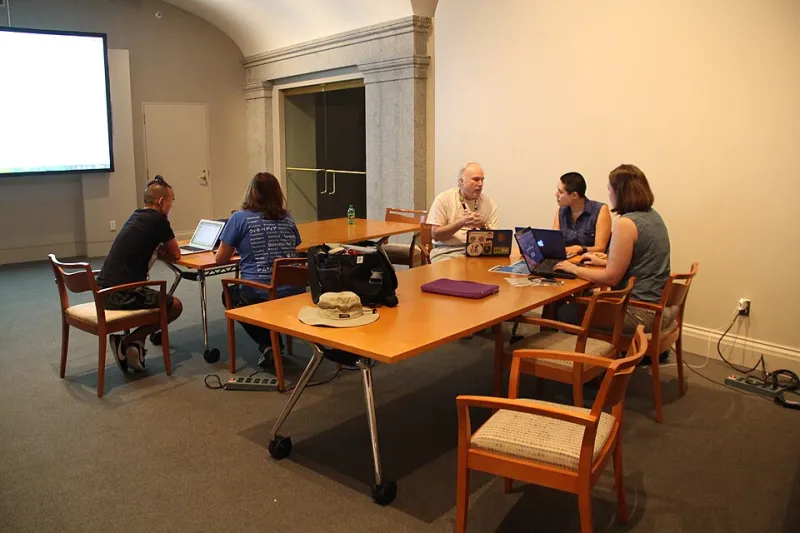
Photo: Fourandsixty, CC BY-SA 4.0, via Wikimedia Commons
Everybody's chasing the viral post. The trending audio. The algorithm boost that turns a Tuesday afternoon into a career-defining moment. And for most creators — especially those building work rooted in specific cultural experiences — that chase is quietly exhausting them.
But something interesting is happening underneath all that noise. A growing number of Asian-American and immigrant creators are doing the opposite. They're building smaller. More deliberately. And in a lot of cases, more profitably.
This isn't a story about giving up on growth. It's a story about redefining what growth actually means.
The Algorithm Was Never Built for You
Here's the uncomfortable truth: content recommendation systems are optimized for the broadest possible engagement. They reward what resonates universally, which means they're structurally biased against anything that requires cultural context to fully appreciate.
A joke that lands perfectly for someone who grew up navigating two languages at the dinner table? It might flatline for a general audience. A piece of art that references a specific immigrant experience — the particular anxiety of the grocery store where nobody speaks English, the pride of watching your parents figure out a new country — that work carries enormous emotional weight for the people who get it. And almost none for the people who don't.
Platforms read that uneven engagement as underperformance. They push the content down. The creator feels invisible.
But here's the flip side: the people who do get it? They feel seen in a way that generic content never achieves. And that feeling is worth something.
Exclusion as a Creative Strategy
It sounds counterintuitive, but some of the most financially stable independent creators working today are actively choosing to not appeal to everyone. They're writing newsletters that assume the reader knows certain things. They're making content in languages other than English, or mixing languages deliberately. They're referencing experiences that require shared background to fully understand.
This isn't gatekeeping. It's specificity. And specificity builds trust faster than broad appeal ever could.
Think about the difference between a restaurant that tries to serve every cuisine versus the spot that does one regional dish so well that people drive forty minutes for it. The latter has a waitlist. The former is always running a Groupon deal.
Creators who build with that same specificity — who say, essentially, this is for us — tend to develop audiences that are deeply loyal, highly engaged, and more willing to pay for things. Courses, memberships, commissions, consulting. The conversion rates on small, highly aligned audiences routinely outperform massive, loosely connected followings.
What "Going Invisible" Actually Looks Like
The creators doing this well aren't hiding. They're just not optimizing for discoverability on platforms that don't reward their work anyway. Instead, they're building in places where community forms more organically.
Private Discord servers. Substack newsletters with subscriber communities. Patreon tiers that feel like being let into a back room. Group chats that started as DMs and became something more. These aren't second-choice platforms. For niche cultural creators, they're often the better choice — because the people who find their way there are self-selected. They came looking for exactly what you make.
One Chinese-American illustrator based out of Brooklyn (you've probably never heard of her, which is kind of the point) runs a newsletter about the visual language of diaspora identity. It has fewer than 3,000 subscribers. She charges $9 a month for the full version. Do the math. That's a real income built on a tiny, deeply invested readership — no brand deals required, no dancing for the algorithm.
The Community Bond That Broad Reach Can't Buy
There's something else that happens when you build a smaller, more specific creative community: the relationships get real. People aren't just passive consumers of your content. They're participants in something. They show up in the comments not to perform engagement but because they actually have something to say.
For creators whose work is rooted in cultural identity, that kind of community can be genuinely sustaining in ways that go beyond business metrics. It creates a feedback loop where the work gets better because the audience is invested. Where criticism is offered in good faith because everyone is operating from shared understanding. Where collaboration happens naturally because the people in your orbit are actually aligned with what you're building.
That's hard to put a number on. But it's the difference between a creative practice that feels hollow and one that keeps you going.
The Long Game
None of this means you should never want your work to reach more people. Visibility matters. Representation matters. But visibility on your own terms — built on the foundation of a community that genuinely cares — is a completely different thing than visibility as an end in itself.
The creators who are quietly winning right now figured out that the algorithm's indifference to their heritage isn't a problem to solve. It's a signal to pay attention to. It's telling them where the platform's priorities are. And it's freeing them up to go build somewhere the algorithm can't follow.
Sometimes the most strategic move is to stop trying to be seen by everyone and start being known by the right people. That's where the sustainable creative career actually lives.